Networking certification costs: include practical learning
Compare networking routes by troubleshooting tasks, assessment requirements and practice costs.
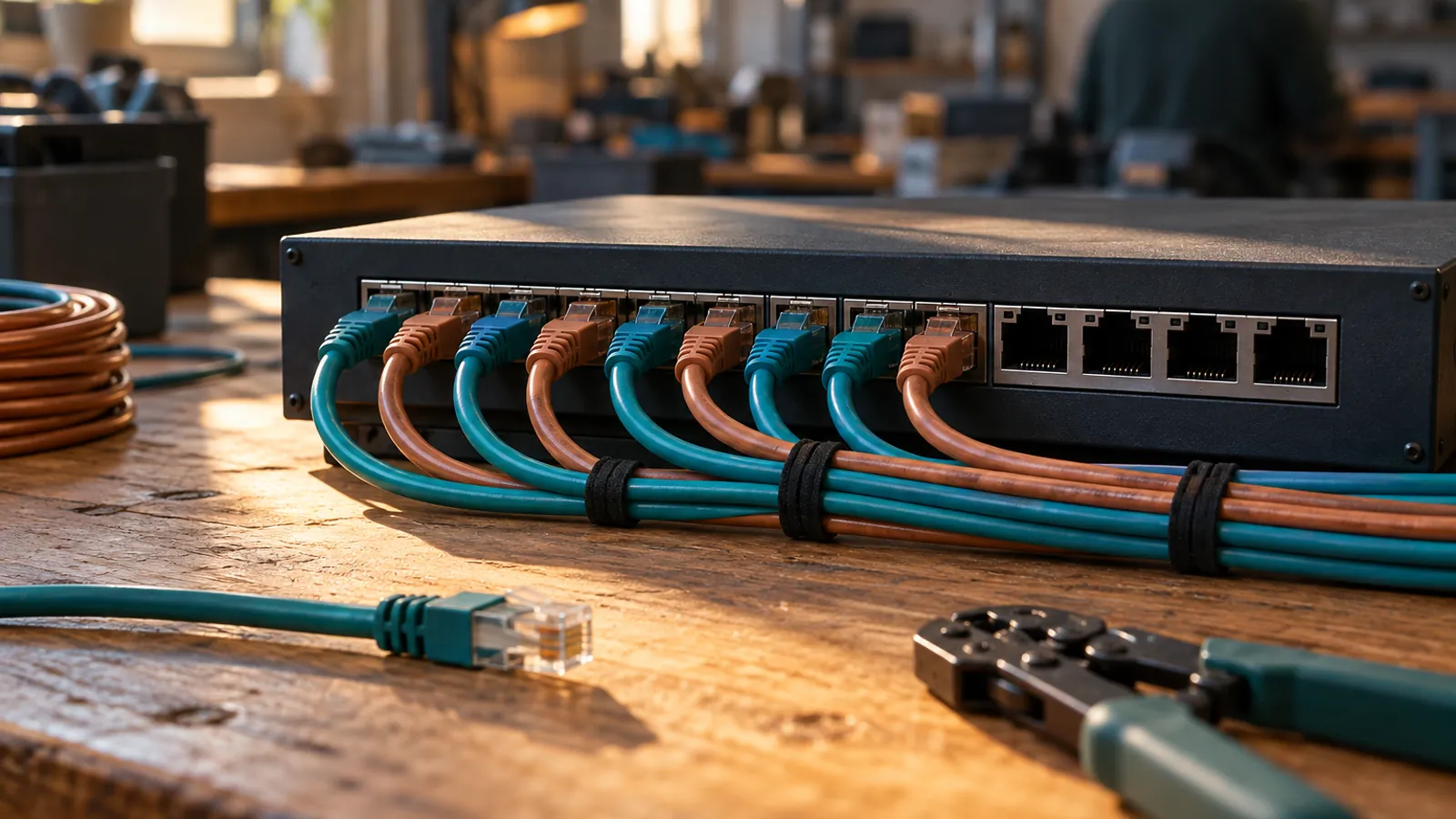
A networking certification budget should include a way to practice packet flow and troubleshooting, not just an exam payment. Choose the assessment by the work you want to do, then decide whether simulation, existing equipment or a small authorized lab can supply the evidence you need. Expensive hardware is not automatically the right first purchase.
Compare scope before equipment
Read the current exam objectives and identify which tasks require explanation, configuration or diagnosis. A conceptual subnetting question and a device troubleshooting task do not require the same preparation. List the interfaces, protocols and operational decisions you need to understand before buying equipment. If you cannot connect a hardware purchase to a specific objective, defer it.
Cisco’s certification FAQ provides exam-specific pricing information, while other issuers publish their own requirements. Use the exact assessment name and code rather than a general networking certificate label. Some routes may involve multiple assessments or different levels. A training provider’s course title is not proof that all credential requirements are included. Keep the issuer’s assessment requirements next to the training provider’s deliverables so you can see what is missing.
Choose a lab with a diagnostic purpose
A useful first lab might connect two small networks and deliberately introduce one routing or addressing error. Write down the symptoms, the tests you ran and the change that fixed the issue. The goal is to explain packet movement and eliminate incorrect hypotheses, not simply to reproduce a configuration from a video. Repeat the exercise with a different fault to check whether you learned a method.
Simulation or emulation can be useful for some objectives, but verify what the environment supports. Physical equipment may matter when the task involves cabling or interfaces; it also brings power, space, noise, firmware and compatibility considerations. Do not buy used hardware solely because it carries a familiar badge. Check whether it supports the features you need, and avoid using devices with unknown configurations on a home or work network without a safe isolation plan.
Compare two illustrative budgets
Suppose a learner has obtained a current exam quote and enters $300 as a hypothetical fee. A software-focused practice plan adds $50 of materials and $0 of new hardware, totaling $350 before other expenses. A second illustrative plan adds $200 of equipment and $30 of cables, taking the same total to $580. These are planning inputs, not vendor price quotes or equipment recommendations.
Ask what the additional $230 enables you to demonstrate. If it supplies no objective you cannot cover another way, keep the lower-cost plan. If hands-on cable diagnosis is central to the intended job, the practical access may be worth arranging through a school, employer or lab rather than owning everything. Borrowing access requires permission and a clear boundary around configurations and data. Do not assume an employer will permit personal experiments on operational equipment.
Explain the result in job terms
Turn the lab into a short troubleshooting record: expected behavior, observed failure, evidence collected, root cause and verification. Include limitations. A small lab does not establish experience operating a large enterprise network, and you should not describe it that way. It does show whether you can reason through a bounded problem and communicate the process.
Before booking, check the current exam version, delivery instructions and any scheduling conditions. Put future maintenance in the ledger separately. Then compare networking roles with the work you practiced. Job titles differ across employers, so read responsibilities such as monitoring, escalation, change control and after-hours support. Compensation depends on that work and your experience; it cannot be inferred from an exam’s price or the amount of equipment on your desk.
Check the cost of using equipment
Ownership cost includes more than the purchase amount. Ask whether you need adapters, compatible cables, storage space or replacement parts to use the equipment safely. Check the power and noise implications in your actual study space. These are questions for your specific equipment, not reasons to add a standard surcharge to every networking budget.
If you have access through a class or workplace, clarify reservation times and permitted changes. Save only authorized, sanitized learning notes. A shared lab can be economical, but unreliable access can also make a tightly scheduled study plan impractical. Compare the schedule as well as the money. Choose a setup you can revisit to repeat a diagnostic exercise rather than a one-time demonstration you cannot reproduce.
Decision checklist
- Record the exact credential or target task and the current official source.
- Separate confirmed cash costs from illustrative scenarios and personal time value.
- Keep a practical output that shows what you learned, with private information removed.
- Recheck changing terms before payment or booking; do not rely on this guide as a quote.
Frequently asked questions
Must I own a rack of hardware?
No. Start from the objectives and choose an appropriate practice environment. Some physical tasks need physical access, but ownership is not the only way to obtain it.
Is the $300 amount a universal exam fee?
No. It is a hypothetical amount used in the example. Verify your exact exam through its issuer.
What should a networking portfolio show?
A bounded problem, diagnostic evidence, a justified fix and verification. Remove secrets, private addresses where appropriate and employer information before sharing.
Continue your plan
- IT certification costs: build the whole price map
- AWS certification fees: plan beyond the exam
- Microsoft certification costs: include the lifecycle
- Certification budget range
- Compare routes by purpose
Sources and review scope
Official source links were checked on October 30, 2026. The budgeting methods, task examples and decision frameworks are original educational guidance; they are not vendor requirements. All hypothetical numbers are labeled illustrative. This is an AI-assisted source review, not a professional credential or a promise that rules will remain unchanged.
- AWS certification FAQ — exam fee categories and official policy links.
- Microsoft certification renewal — eligible renewal process.
- Google Cloud certification FAQ — credential validity and exam-page pricing guidance.
- Cisco certification FAQ — assessment and pricing verification.